
The World Athletics Ultimate Championship will make its debut in Budapest from 11 to 13 September 2026 with an unusually simple promise: bring many of the best athletes in the world together, remove much of the waiting that surrounds a traditional global championship and settle 28 titles across three evening sessions. The competition arrives at an interesting moment for athletics. There is no outdoor World Athletics Championships or Olympic Games in 2026, leaving room for a new global event at the end of the season. World Athletics is using that space to test a much shorter championship built around leading names, selected disciplines, direct qualification routes and a record US$10 million prize fund. The important question is not simply whether Budapest can produce memorable races and field-event contests. It is whether a three-day tournament can offer lessons about how major athletics could be presented in future without losing the depth, variety and sporting traditions that make the established championships valuable.
Why the Ultimate Championship Is Different from a Traditional Global Meet
The most obvious difference is time. A World Athletics Championships normally unfolds across more than a week, with qualification rounds, heats, semi-finals and finals spread through morning and evening programmes. Budapest 2026 reduces the entire Ultimate Championship to three evenings, each scheduled to last about three hours. Competition starts at 19:00 local time on Friday 11 September and at 18:00 on both Saturday and Sunday, with each session ending three hours later. Rather than asking spectators to follow a long championship narrative, World Athletics is offering a concentrated sequence in which important events begin almost immediately and finals appear throughout every night.
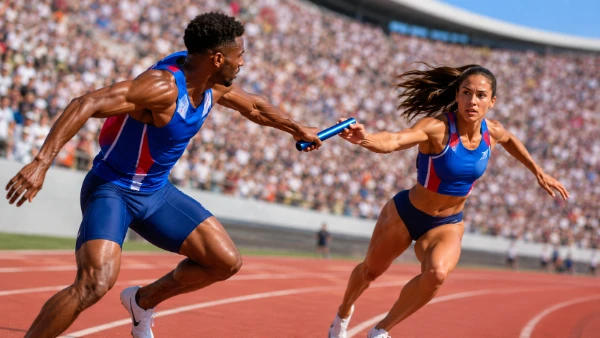
The programme contains 28 finals: 26 individual events and two mixed relays. It covers many of the disciplines most familiar to a broad athletics audience, including the 100m, 200m, 400m, 800m, 1500m and 5000m, sprint hurdles, 400m hurdles and selected jumping and throwing events. The mixed 4x100m relay is an especially notable addition alongside the mixed 4x400m. At the same time, this is deliberately not a complete version of the World Athletics Championships. There is no marathon, race walking, 3000m steeplechase or combined-events competition, while several field disciplines are also absent. That narrower programme is central to the idea: the organisers are trading breadth for speed.
The quality of the fields is intended to compensate for their smaller size. Qualification routes bring together athletes who have already proved themselves at the highest level, including Olympic champions from Paris 2024 and world champions from Tokyo 2025, alongside athletes who qualify through the 2026 season. Wanda Diamond League success, world rankings and performances during the qualification period all have a role in forming the final line-ups. Some of the biggest names in the sport have already secured places, including Mondo Duplantis, Noah Lyles, Faith Kipyegon, Sydney McLaughlin-Levrone, Beatrice Chebet, Keely Hodgkinson and Letsile Tebogo. The principle is closer to an all-star championship than to the broad national selection model familiar from the Olympics and World Championships.
A Three-Hour Session Changes the Rhythm of Athletics
Shorter sessions matter because athletics has traditionally asked spectators to divide their attention between several competitions taking place at once. A sprint may be starting while a high jump continues at one end of the stadium and a throwing competition develops at the other. That variety is one of the sport’s strengths, but it can also be difficult for casual viewers to follow. The Ultimate Championship has been designed to reduce some of that competition for attention. The timetable is more tightly controlled, and World Athletics has said it will try to keep the focus on one field event at a time whenever possible. The intention is to make each contest easier to understand as part of a continuous evening rather than as one piece of a much larger schedule.
Track athletes also have less room for a cautious opening round. The 100m, 200m, 400m, 800m and hurdle disciplines begin at the semi-final stage, with two semi-finals of eight athletes and four from each advancing to the final. The 1500m, 5000m and mixed relays are straight finals. All field events also go directly to the final. This removes the preliminary rounds in which leading athletes at a traditional championship may be able to qualify without producing anything close to their best performance. In Budapest, the margin for a slow start is much smaller, which could make the early stages of each evening more meaningful.
That approach also changes what a spectator needs to know before watching. There are fewer qualification calculations, fewer rounds and fewer days between the first appearance of an athlete and the contest for the title. Someone who follows only major championships can tune in on Friday and quickly understand what is at stake. This does not automatically make the competition better than a longer championship, but it does address a genuine challenge for athletics: making a sport with dozens of disciplines easier to follow without reducing it to only one type of event. Budapest will provide the first serious test of whether three tightly organised evenings can maintain that balance.
Why the Format Could Matter Beyond Budapest
The Ultimate Championship has been created as an end-of-season event rather than a replacement for the Olympics or World Athletics Championships. That distinction is important. Athletics already has championships with deep national teams, qualification rounds and a broad range of disciplines. What it has not always had is a consistent global finale that brings major stars together at the end of a season in a year without an outdoor World Championships or Olympic Games. World Athletics plans to stage the Ultimate Championship every two years, giving the sport another major title and potentially creating a clearer closing point for the international outdoor season.
The financial structure may be almost as significant as the timetable. The total prize fund is US$10 million, which World Athletics describes as the largest ever offered at a single track and field competition. Winners of individual events are due to receive US$150,000, while prize money extends throughout the participating field rather than being reserved only for champions. Athletics has long faced questions about how frequently its leading competitors can earn substantial prize money compared with stars in sports such as tennis, golf or major professional leagues. One event cannot remove that difference, but a successful championship with meaningful payments could strengthen the case for placing athlete earnings closer to the centre of major-event planning.
The timing may also encourage head-to-head contests that athletics sometimes struggles to produce regularly. Elite athletes can spend much of a season following different meeting schedules, choosing different events or preparing for a single championship peak. A championship title and a large prize fund provide a reason for leading performers to target the same weekend. That does not guarantee every ideal rivalry will happen: injuries, fatigue and individual season plans will always matter. Even so, a recognised global finale has a better chance of concentrating leading athletes into direct contests than an ordinary late-season meeting whose importance varies from one competitor to another.
Athletes Are Being Given a Larger Role in the Event
World Athletics is also using Budapest to experiment with how athletes are presented away from the moment of competition. The day before the first session will include a series of media and public-facing activities rather than relying solely on a conventional pre-championship press conference. Current and former stars have been given visible roles in shaping the identity of the event. Usain Bolt has been named the Ultimate Legend, while Noah Lyles has been involved as an Ultimate Star, MC and creative adviser. Mondo Duplantis has contributed the official anthem, titled Gold. These details do not determine sporting credibility, but they show an effort to make individual athletes more recognisable instead of treating them only as names on a start list.
One of the more unusual ideas will appear before the men’s and women’s 200m semi-finals. Athletes will choose their preferred semi-final and lane in world-ranking seed order during a live lane draft. Normally, lane allocation is an administrative part of a championship that attracts little attention outside specialist coverage. Turning it into a visible choice gives athletes some control while also creating an extra storyline before they race. World Athletics has described the Budapest version as a trial, so it should not be assumed that the same method will immediately become standard elsewhere. Its value will depend on whether athletes consider it fair and whether spectators actually find the process useful.
The awards will look different too. World Athletics has announced that the Ultimate Championship will not use conventional medals. Invited competitors will receive participation tokens, while each champion will earn a trophy that connects with that token. This is a relatively small change beside the competition format, but it underlines the organisers’ intention to give the event an identity separate from the Olympics and World Championships. That is a sensible objective if the Ultimate Championship is to survive long term. A new event is unlikely to become important simply by copying an established championship in a shorter form; it needs a recognisable purpose of its own while keeping the result on the track or field as the main reason the title matters.
What the Three-Day Experiment May Gain and What It May Lose
The strongest case for the Ultimate Championship is accessibility. Three evenings are easier to follow than nine or ten days, particularly for people who enjoy major athletics but do not watch the international circuit every week. A clear start and finish, strong fields and frequent finals may also make it easier for broadcasters to give the event consistent scheduling. World Athletics has secured live coverage through major broadcasters in numerous markets, including the BBC in the United Kingdom. If audiences remain engaged throughout three compact sessions, organisers of other athletics meetings will have useful evidence that shorter programmes and clearer competition narratives can work at the highest level.
The main weakness is the other side of the same decision. A shorter championship cannot contain everything. Athletics gains much of its character from the contrast between explosive sprints, distance running, technical jumps, heavy throws, endurance events and combined competitions. Budapest keeps a substantial range but still leaves notable parts of the sport outside the programme. A fan of the steeplechase, shot put, discus, decathlon, heptathlon, race walking or marathon cannot see an Ultimate champion in those events in 2026. If compactness became the dominant model for major championships rather than an additional format, athletes in less commercially prominent disciplines could reasonably question where they fit.
Smaller fields create another trade-off. Traditional global championships allow emerging athletes to line up alongside established champions, and surprise finalists or unexpected medal winners are part of their appeal. The Ultimate Championship is intentionally more selective. That should raise the average quality of each field, but it reduces the number of athletes who receive the experience of competing at a global championship. It may also narrow the range of countries represented in individual events, even though there is no fixed cap on how many qualified athletes from the same nation can compete in a discipline. The format therefore rewards proven excellence more strongly than broad participation.
Can Three Days Really Reshape Major Athletics?
The answer will depend on what is meant by changing athletics. Budapest is unlikely to make the Olympics or World Championships suddenly abandon their longer programmes, nor is there a strong sporting reason for them to do so. Those competitions perform a different role. Their qualification rounds, larger teams and wider event lists create stories that a selective three-day contest cannot reproduce. The more realistic possibility is that the Ultimate Championship influences how other major meetings are scheduled and presented. Shorter sessions, fewer simultaneous field events, clearer storytelling and stronger financial incentives can be adopted in different degrees without copying the entire Budapest model.
Success should therefore be judged by more than stadium atmosphere or television figures from one weekend. The quality of the fields, athlete feedback, competitive fairness, audience retention and the value attached to the new title over time will all matter. It will also be important to see whether leading athletes continue to treat the event as a priority after its novelty fades. A championship becomes significant because competitors want to win it repeatedly and because fans remember those victories in the context of an athlete’s career. That reputation cannot be created by branding alone; it has to develop through competition.
What Budapest already shows is that World Athletics is willing to test a different answer to a long-standing question: how can track and field remain a broad multi-discipline sport while making its biggest occasions easier to follow? The Ultimate Championship offers one possible response by concentrating elite competition into three nights without pretending to reproduce every part of a traditional global championship. If the first edition produces meaningful rivalries, attracts sustained attention and is valued by the athletes themselves, elements of its format are likely to influence other events. If it feels too narrow or too compressed, the established championship model will have made an equally important point. Either way, 11–13 September 2026 will give athletics something more useful than a theoretical debate: a real test in front of a global audience.