
The Commonwealth Games have long been one of the largest international sporting gatherings outside the Olympic movement. Since their first edition in 1930, the Games have brought together athletes from across the Commonwealth in a broad programme featuring athletics, swimming, cycling, gymnastics, team sports and many other disciplines. However, Glasgow 2026 will represent a major departure from previous editions. Facing financial pressures, organisational challenges and changing expectations around major sporting events, the Games will be delivered in a significantly reduced format. The decisions made in Glasgow may influence how future multisport competitions are organised, funded and presented to audiences around the world.
Why Glasgow 2026 Will Be Different from Previous Commonwealth Games
Glasgow stepped forward to host the 2026 Commonwealth Games after the Australian state of Victoria withdrew from the project in 2023 due to rapidly increasing projected costs. Estimates for the original event exceeded several billion dollars, prompting concerns about financial sustainability. Rather than allowing the Games to be cancelled entirely, Commonwealth Sport and Scottish organisers developed a more compact model that could be delivered within a realistic budget while preserving the competition itself.
The Glasgow 2026 programme will feature a reduced number of sports compared with Birmingham 2022. The organisers have focused on disciplines that can be staged using existing venues and infrastructure. This approach removes the need for expensive construction projects, which have often been among the largest financial burdens associated with hosting major sporting events. The strategy reflects a growing belief that future competitions should prioritise practicality over expansion.
Another significant difference is the concentration of venues within a relatively small geographical area. Athletes, officials and spectators will spend less time travelling between locations, helping to reduce logistical costs and environmental impact. Such a model aligns with broader discussions taking place across international sport regarding sustainability, resource management and the long-term value of hosting major events.
Financial Sustainability Becomes the Main Test
One of the biggest questions surrounding Glasgow 2026 concerns whether a smaller event can still deliver sporting, commercial and social value. Many host cities have become increasingly cautious about bidding for major competitions because of the financial risks involved. Large budgets, security requirements and infrastructure investments have often created concerns about public spending and long-term economic returns.
The Glasgow model offers an opportunity to evaluate whether a leaner approach can maintain athlete participation, sponsor interest and international attention. If successful, it may provide a template for cities that wish to host major competitions without committing to extensive construction programmes or long-term debt obligations. Such an outcome could encourage a broader range of potential hosts in the future.
At the same time, organisers must demonstrate that reducing costs does not weaken the overall experience. Broadcasters, sponsors and spectators still expect high-quality competition and professional event delivery. The balance between efficiency and prestige will be one of the most closely observed aspects of the 2026 Games.
How Athletes and Sports Federations May Be Affected
The reduced programme inevitably means that some sports traditionally associated with the Commonwealth Games will not appear in Glasgow. This creates challenges for athletes who often use the event as a major international competition between Olympic cycles. For certain disciplines, the Commonwealth Games provide valuable exposure, funding opportunities and ranking points that can influence sporting careers.
National federations must also adapt to a changing environment. A smaller programme may require adjustments to athlete development pathways, competition schedules and funding strategies. Countries that typically send large delegations could face difficult decisions regarding team selection and resource allocation. These changes may alter how nations approach future Commonwealth participation.
Despite these challenges, many athletes have welcomed the decision to preserve the Games rather than see them disappear entirely. The Commonwealth Games remain an important opportunity for emerging competitors to gain experience on an international stage. Maintaining that pathway may prove more important than preserving every element of the traditional programme.
The Impact on Sporting Identity and Global Relevance
The Commonwealth Games occupy a unique position within international sport. Unlike the Olympic Games, they are linked by historical, cultural and political connections between member nations. As international sporting calendars become increasingly crowded, organisers must continue demonstrating why the event remains relevant to athletes, broadcasters and audiences.
Glasgow 2026 may serve as a test of whether the Commonwealth Games can evolve while maintaining their identity. A more focused programme could allow organisers to place greater emphasis on elite competition and athlete stories rather than the scale of the event itself. Modern audiences increasingly consume sport through digital channels and short-form content, making quality engagement potentially more valuable than quantity.
If viewership remains strong and athletes continue to prioritise participation, the Games could emerge with a clearer purpose. Success would show that international sporting events do not necessarily need to grow larger with every edition to remain meaningful and competitive in the global sports market.
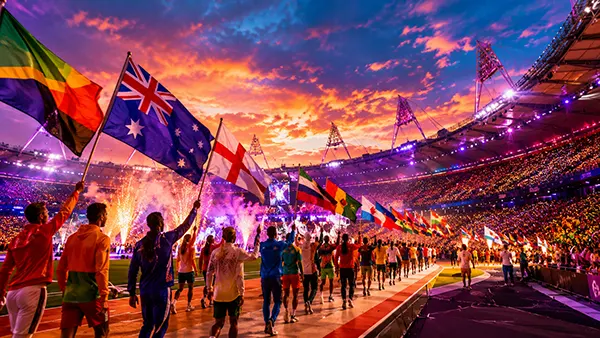
What Glasgow 2026 Could Mean for the Future of Multisport Events
The challenges faced by the Commonwealth Games are not unique. Across the sporting world, organisers of large-scale competitions are reassessing costs, sustainability targets and public expectations. The Olympic movement, continental games and regional championships have all encountered questions about hosting expenses and long-term economic impact. Glasgow 2026 arrives at a time when these discussions are becoming increasingly important.
If the Scottish model proves effective, it may influence how future multisport events are designed. Organisers could place greater emphasis on using existing venues, reducing travel requirements and limiting unnecessary expansion. Such measures would help lower financial barriers while making major events more accessible to a wider range of host cities.
The concept of a flexible event structure may also gain support. Rather than requiring every host to stage an identical programme, future competitions could adapt their sporting schedules according to available infrastructure and local priorities. This would represent a substantial shift from traditional hosting models but could improve long-term sustainability.
A Potential Blueprint for a New Era of International Sport
By 2026, international sport will continue facing pressures related to funding, environmental responsibility and audience engagement. Glasgow’s compact Commonwealth Games will effectively function as a real-world case study examining whether major competitions can remain influential while operating on a smaller scale. The lessons learned will be closely monitored by sports governing bodies worldwide.
Success should not be measured solely by attendance figures or television audiences. Equally important will be the ability to deliver a positive athlete experience, maintain competitive standards and achieve financial objectives without creating significant burdens for taxpayers or host communities. These factors increasingly define what modern sporting success looks like.
Whether Glasgow 2026 becomes a turning point or simply a temporary solution, its significance extends beyond the Commonwealth movement itself. The event may provide valuable evidence about how multisport competitions can adapt to changing economic realities while continuing to offer meaningful opportunities for athletes and fans. For that reason, Glasgow 2026 could become one of the most influential Commonwealth Games editions in recent history.